Five jobs you can hand to Agentique
Where does an AI assistant actually save time in a company that runs on documents? Five concrete jobs, with the numbers behind them.
Every company that runs on documents has the same five time sinks. Someone digs through folders for one clause. Someone retypes numbers from invoices into a spreadsheet. Someone writes the same Monday summary every single week. Here is what happens when you hand those jobs to Agentique instead.
1. Finding the one thing you need
"What is the late payment penalty in the supplier contract?" Ask exactly like that, in Romanian or English, and you get the answer with a link to the document and the page it came from, so checking takes one click instead of ten minutes of scrolling through a scan.
Two details matter here. You can type without diacritics: "plati intarziate" finds documents that say "plăți întârziate". And the answer only uses what your documents actually say. If the information is not there, it tells you so and asks how you want to proceed, instead of inventing something plausible.
How well does the finding part work? We test it on a fixed set of 91 questions written the way real users ask, in both languages, with typos and missing diacritics included. 90 of the 91 land on the right document.
2. The pile nobody has time to sort
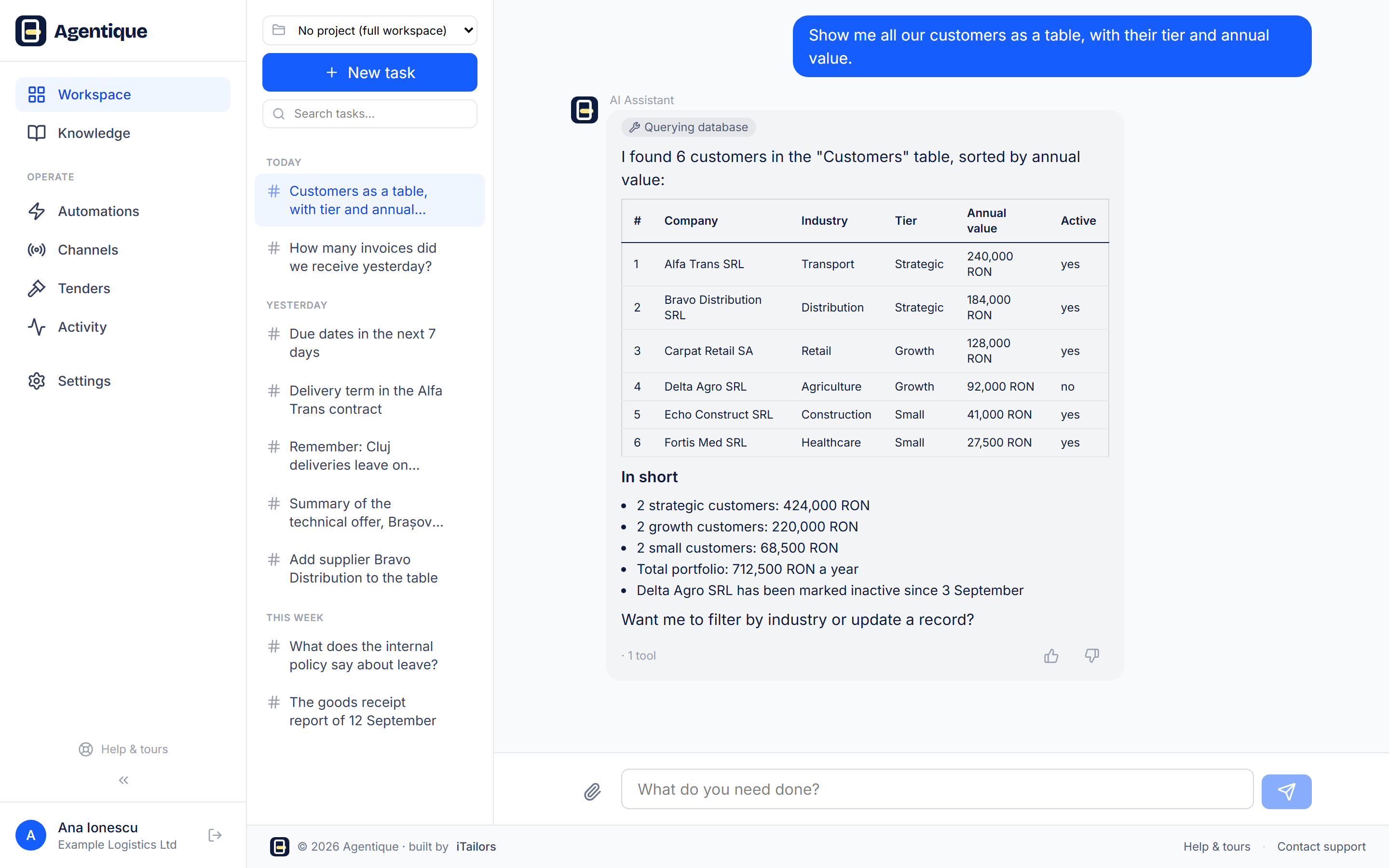
That folder of 60 unsorted PDFs from an old laptop, or the archive a client sends you as a single zip. Drop the whole thing in. Agentique accepts zip archives with up to 100 files inside, reads each supported file, writes a short summary of every one, and files them into categories on its own. Files it cannot use (an installer, a video) are listed by name so you know exactly what was skipped.
Scans and phone photos count as documents too. A photographed delivery note with a stamp on it is read page by page, like a person would read it.
The practical limits, so there are no surprises: files up to 50MB each, archives up to 100 files.
3. The report you write every week
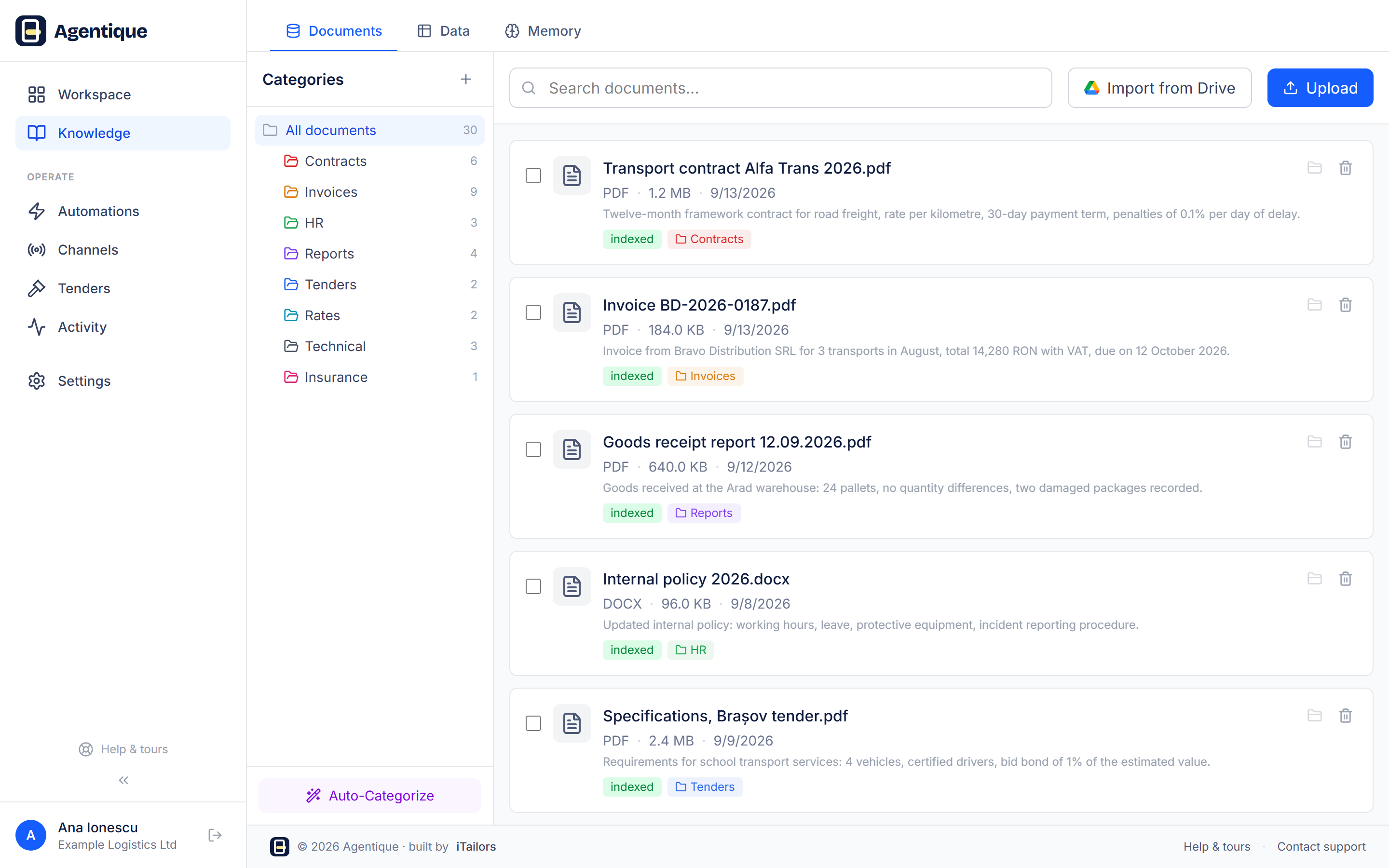
Tell it once, in chat: "every weekday at 8:00, send me a summary of the documents that came in the day before". That becomes a scheduled automation you can see, edit or pause on the Automations page. Hourly, daily, weekdays, weekly or monthly. The Monday summary stops being someone's job.
4. The numbers scattered across documents
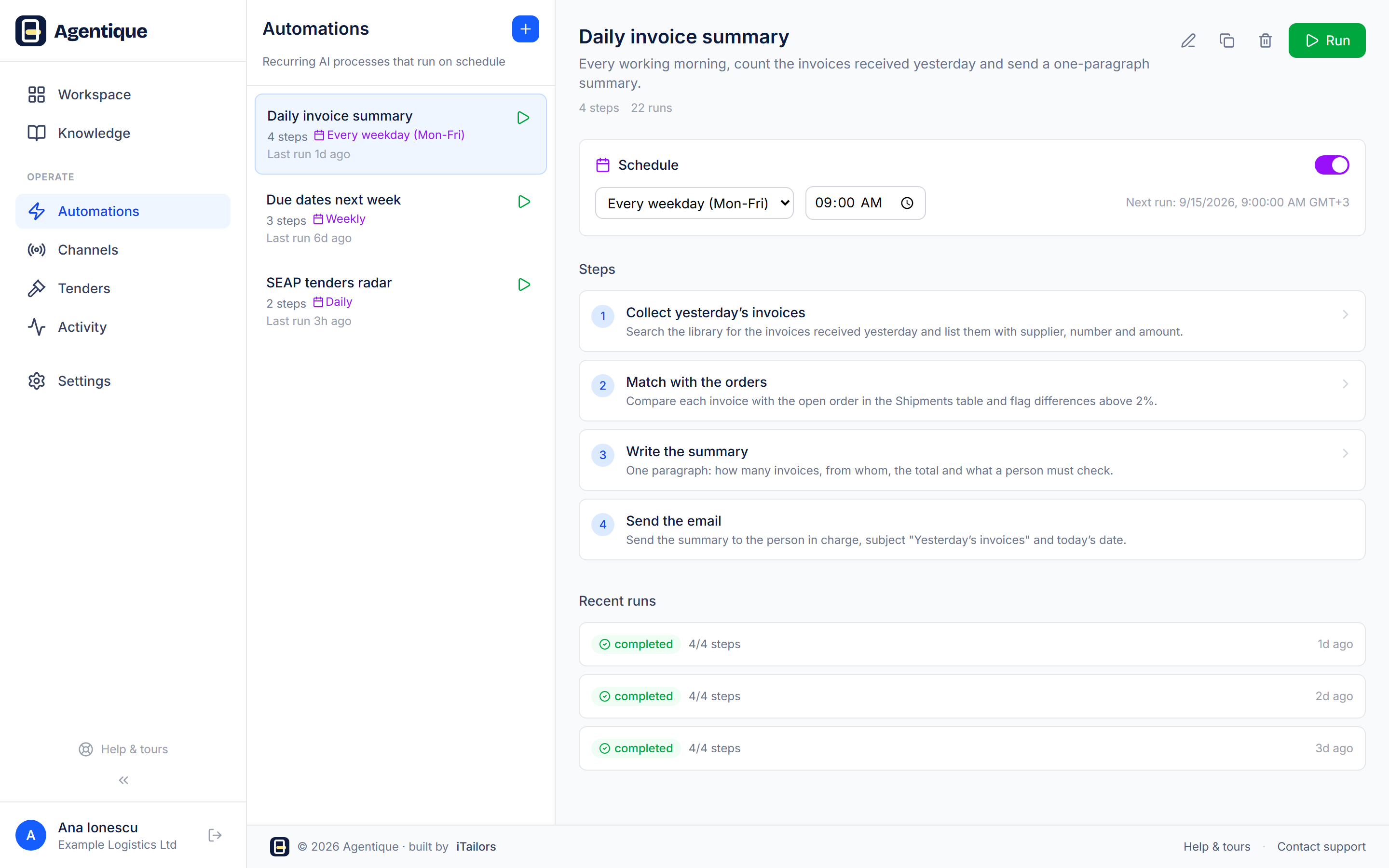
"What is the total value of the leasing instalments we pay this year?" That answer lives in four different contracts. Agentique reads them, does the arithmetic, and can put the result in a real file: a PDF report or an Excel table you can forward as is. If you keep structured records, it fills your data tables directly, and you check the result instead of typing it.
5. The things everyone forgets
Tell it "the supplier changed their bank account in March" and every future answer about payments takes that into account. Corrections, agreed discounts, internal rules: they persist across conversations, and the Memory page shows everything it has remembered so you can edit or delete any of it.
One more thing about trust
Anything sensitive stops and asks first. Sending an email, deleting a document, changing a record: you see exactly what is about to happen and confirm it, every time. Your documents stay in your company's own space, are never used to train AI models, and never mix with anyone else's.
Get started
Want to see it on your own documents? Bring a folder of real ones, the messier the better. Write to us and we will send you an offer.